General News
9 December, 2025
Stalemate over water quality at platypus haven
ACTIONS to clear up the water in Peterson Creek and protect the local platypus breeding ground have hit a wall, as state government agencies put the responsibility squarely with the Tablelands Regional Council.

“The really big issue is all the State Government agencies, like the environment department and health department.... We talked to them at quite high levels, and they all point the finger at the local government,” Yungaburra Landcare Group (YLG) Water Quality Steering Group spokesperson, Dr Dermot Smyth, said.
“It’s their responsibility to achieve the water quality objectives that the state environment department has set, and to protect the values that they have identified, and that’s clearly not happening.
“It’s also pretty clear to us that council really doesn’t probably have the funding or the expertise or the resources to do it.”
The YLG, a volunteer community group, released findings in October that Peterson Creek had faecal bacteria in the water that were up to 93 times higher than the safe concentration for swimming.
It also raised questions over any impacts on the platypus, which are a major tourism drawcard for the village and the Tablelands.
The research, conducted by YLG and analysed by the Cairns Regional Council Laboratory, was sparked by concerns about the absence of platypus at the creek during certain times of the year.
“We’ve got a camera trap fixed field camera set on a platypus breeding burrow at Peterson Creek,” Dr Smyth explained.
“We’ve got some excellent footage of platypus coming and going from last year, it was just amazing. But this year we’ve had one or two glimpses, but nothing else.
“We don’t know whether that’s been the result of the water or just a fluctuation.”
The group will conduct one more water sampling test next month, after which their Landcare funding runs out.
“I don’t see much point in doing any more testing until there’s some action,” Dr Smyth said.
Since the findings, the council had created a communication campaign on social media and signs advising people to consider water quality before entering the water.
“At least that’s a start. But I reckon they won’t go any further than that to be honest, so we’re at a bit of a stalemate,” Dr Smyth said.
A council spokesperson said the TRC was aware of the water quality issues in Peterson Creek.
“Like all natural watercourses, Peterson Creek is vulnerable to contamination resulting from natural and human sources,” the spokesperson said.
“We have been working with Yungaburra Landcare to ensure that all relevant environmental agencies are informed of the monitoring results, and we will support Yungaburra Landcare in the development of a water quality improvement program for Peterson Creek.
“This water quality program will aim to identify pollution sources and assist our locals to improve waterway protection and reduce the risk of water contamination.”
However, Dr Smyth said the YLG was a volunteer group, and did not have the resources to lobby for grants.
“What I would ideally like to see council do is raise their ambitions – even though they might not have the resources or the staff – to set themselves the goal of achieving [the state’s] water quality objectives and protecting the [identified] values, and to put pressure on the state government or federal government to give them the resources to do it.
“I would like to see them lead a process.”
He said the waterway needed a professional scoping study and an outline of remediation options.
Dr Smyth also acknowledged that the creek was at a disadvantage because it didn’t impact the Great Barrier Reef which was a government policy priority.
“Little Peterson Creek and Yungaburra generally flow into Tinaroo Dam, and the dam is regarded as a barrier to stop all the bad stuff,” he said.
“But it doesn’t mean we shouldn’t keep trying.”
In the meantime, the YLG continues to be “up to our necks in the creek, removing weeds and other debris”.
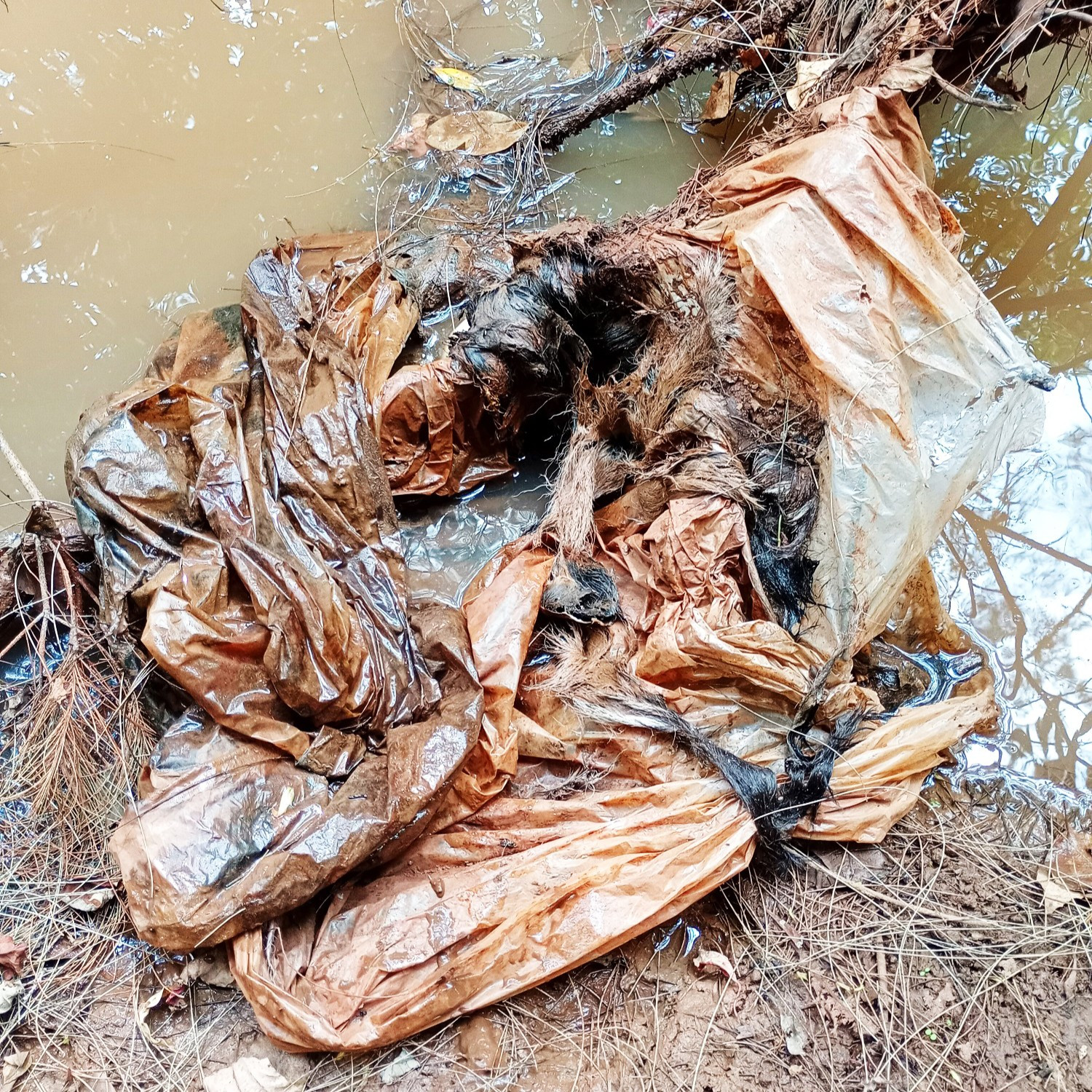
Just three weeks ago, a local resident found the remains of a calf wrapped in plastic in the creek, while months earlier, plastic bags filled with cattle offal were dumped.
“Sadly, this is another indication of the ill treatment of this important platypus habitat,” Dr Smyth said.
“Look, it might take 10 or 20 years to make a real difference to the creek, but unless we have the vision, and start doing something now, it won’t happen.
“Yungaburra has got a beautiful sign ... of platypuses swimming underwater in crystal clear water with ‘Welcome to Yungaburra’.
“That painting is like a vision statement for what we’re on about.”